Maras and Moray sit a short drive apart in the Sacred Valley. Most visitors combine both into a single half-day trip as part of a wider Sacred Valley trip.
Neither site is directly served by public transport. This is why so many travelers visit as part of a private tour, arranged from a Cusco hotel or a Sacred Valley base like Urubamba.
What Are Maras and Moray and Where Are They
What Makes Moray Worth Visiting
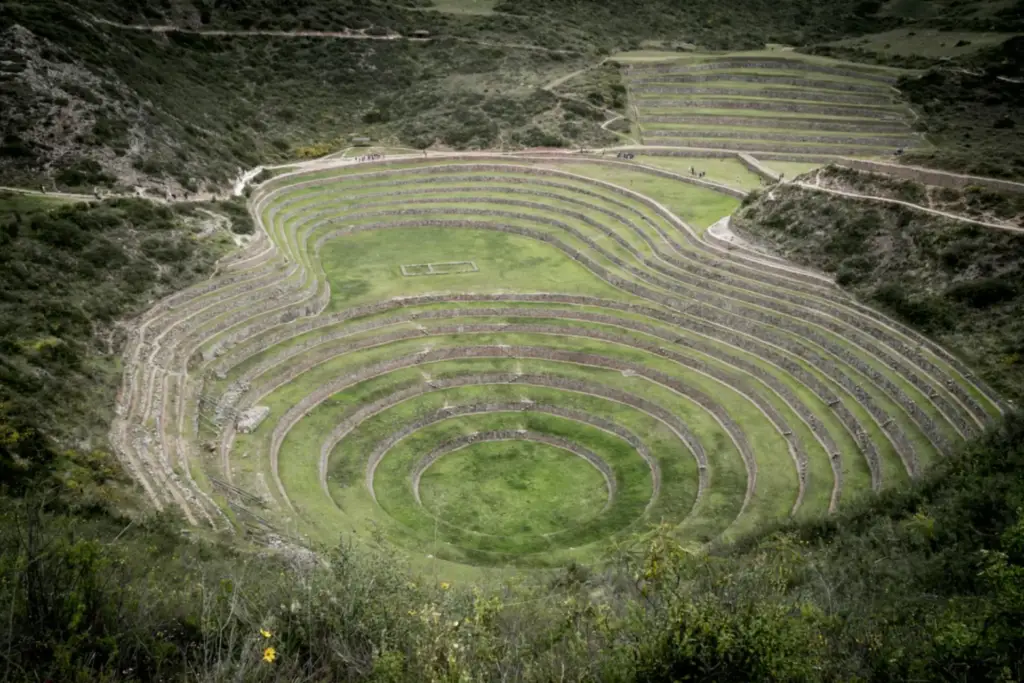
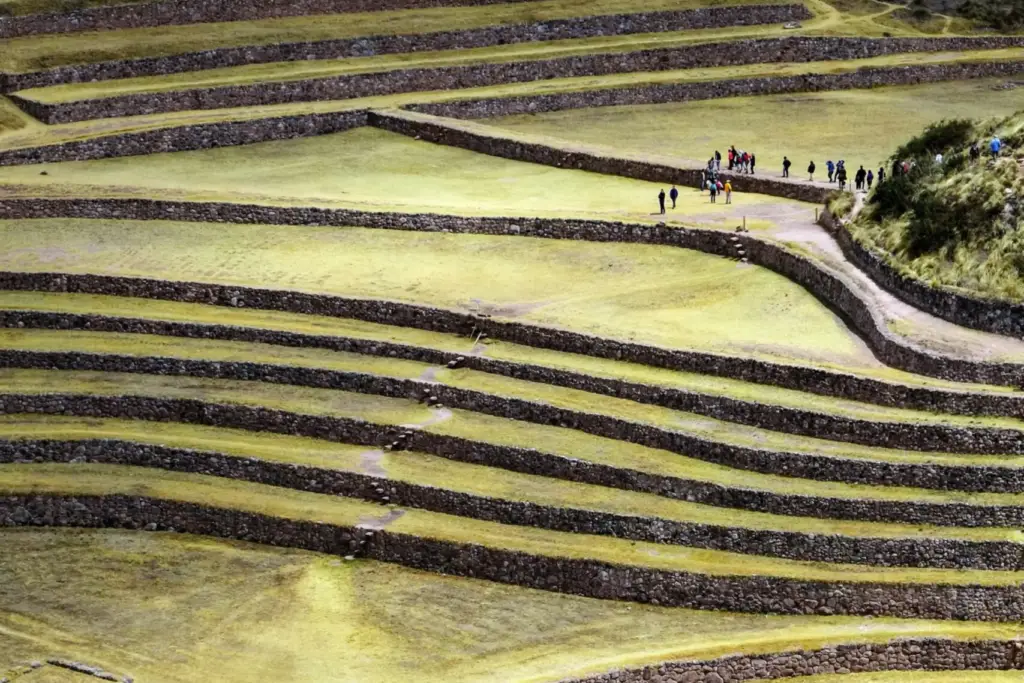
Moray is a series of circular terraces cut into a natural depression in the earth. The Incas used it to test crops at different microclimates.
Each ring sits at a slightly different temperature than the one above it. As a result, this detail still puzzles agricultural researchers today.
The site covers a wide area, with the largest depression reaching nearly 30 meters deep. Walking the rim gives the best overall view of the terraces below. A full loop around the main depression takes about 20 to 30 minutes at a relaxed pace.
What Makes Maras Worth Visiting
A few kilometers from Moray, thousands of small salt pools cascade down a hillside. In fact, families have worked these pools by hand for generations.
Visitors can walk between the pools on narrow dirt paths. Many pools sell bags of salt directly on site.
The salt comes from an underground spring, not the ocean. Local families still divide the pools by inheritance, exactly as they have for generations.
The History Behind Both Sites
Moray predates written Spanish records, so its exact original purpose remains debated among archaeologists.
The leading theory holds that Inca farmers used the terraces to test which crops grew best at different simulated altitudes and temperatures.
Maras has a separate, older history. Salt has been harvested from its spring for centuries, long before the Inca expanded into the valley.
How Salt Is Actually Harvested at Maras
A single underground spring feeds every pool at Maras, carrying naturally salty water down from the mountain above.
Families channel this water into their own pool, then let the sun evaporate it over several weeks.
What remains is a thick layer of salt, raked by hand and carried out in sacks for sale.
The dry season produces the most salt. Meanwhile, rain dilutes the pools and slows the entire evaporation process.
Is a Maras and Moray Visit Right for You?
Accessibility Considerations
Moray’s rim path is relatively flat and manageable for most visitors with limited mobility.
Maras is more challenging. The descent to the salt pools involves uneven steps and narrow dirt paths.
However, travelers with mobility concerns can still view Maras from the upper viewpoint without descending to the pools themselves.
Visiting With Family
Both sites involve some walking on uneven ground, which matters when traveling with young children or older relatives.
Moray has clearer, wider paths around its rim. Maras requires more careful footing between the narrow salt pool walls.
A private driver removes the pressure of a fixed group schedule, letting families move at whatever pace works best.
How Far Apart Are They?
Moray to Maras takes about 30 minutes by car along a dirt road that winds through open farmland. Neither site connects easily to public buses, which is part of why most visitors arrange private transport.
Most independent travelers end up negotiating with a taxi driver to wait at each stop. This often costs more than a planned private tour.
Planning Your Maras and Moray Visit
Best Time to Visit and Seasonal Weather
Morning visits mean cooler temperatures and softer light for photos at both sites. Our month-by-month Cusco weather guide helps you choose the right travel dates.
However, afternoons bring more tour buses, particularly at Maras. An early start avoids the biggest crowds.
The dry season, May through September, brings the clearest skies and the easiest walking conditions at both sites.
The wet season, November through March, still allows visits, though afternoon rain is common and the Maras access road turns muddier.
April and October sit between the two seasons, often offering a good mix of green scenery and manageable weather.
Entrance Fees and Tickets
Moray is included in the general Cusco Tourist Ticket (Boleto Turistico), checked at the entrance gate.
Maras charges a separate small entrance fee, paid directly on site and not covered by the Tourist Ticket.
What to Bring and Wear
Both sites sit above 3,300 meters, so sun protection and water matter even on cool days.
Comfortable walking shoes help most at Maras, where the paths between salt pools are narrow and uneven.
Restrooms, Food, and Practical Details
Basic restrooms exist at both entrances, though facilities are simple compared to city standards.
Small stands near the Maras entrance sell snacks and drinks. Moray has fewer food options directly on site.
Cell signal is spotty at both locations, so downloading maps or directions in advance helps.
A Sample Full-Day Itinerary
Many travelers extend their Maras and Moray half-day into a full day by adding Ollantaytambo or Pisac. Our Cusco to Pisac guide explains how to reach that town. Our Cusco to Chinchero guide covers the plateau town on the same route. Our sacred valley map shows where the plateau stops sit above the valley floor. For the practical side, our guide to Moray Cusco covers the drive, the ticket, and the timing.
A typical full day starts at Moray in the morning, continues to Maras before midday crowds arrive, then finishes at Chinchero or Ollantaytambo in the afternoon. If you plan to end the day in the Sacred Valley, our private one-way transfer from Cusco to Ollantaytambo via Maras and Moray drops you at your hotel or the train station. Also, our guide to the Sacred Valley of the Incas explains how the plateau fits with the valley floor. Planning the drive from the city? Read Cusco to Maras.
This pacing avoids the worst heat and tour bus traffic, while still covering multiple Sacred Valley highlights in one trip.

Beyond Maras and Moray: Nearby Sites and Culture
Chinchero: The Third Stop
Most Maras and Moray tours add a third stop at Chinchero on the way back to Cusco. Our guide to full-day outings from the city compares this loop with other routes. Also, our boleto turistico cusco guide shows how to save money on entry.
This colonial town sits on top of an Inca temple. Local weavers often demonstrate traditional textile techniques for visitors passing through.
What Else Is Nearby
Urubamba, the largest town in this part of the Sacred Valley, sits about 30 minutes from both sites. Our guide to the road from Cusco into the valley lists drive times to each town. Tours often include the vehicle, so check how a tour pickup compares with a private ride for this route.
Ollantaytambo, with its own Inca fortress and train station, is roughly 45 minutes further along the valley. Our Cusco to Ollantaytambo shuttle covers that route.
Many multi-day Sacred Valley itineraries pair Maras and Moray with one of these towns as an overnight base.
Combining Maras and Moray With Other Sites
Many travelers pair a Maras and Moray tour with a stop in Ollantaytambo or Pisac on a longer Sacred Valley day.
A private driver makes this combination easy, adjusting the route and timing without a fixed group schedule.
Respecting the Salt Pool Families
Each pool at Maras belongs to a specific family, passed down through generations since before Inca times.
Staying on marked paths protects both your footing and the pools themselves, since the salt crust can be fragile underfoot.
Buying salt directly from stands at the entrance supports these families directly, more so than souvenir shops elsewhere in Cusco.
Photography Tips at Both Sites
Moray photographs best from the upper rim, where the full circular pattern of the terraces is visible at once.
At Maras, shooting from the access road above the pools captures the full patchwork of salt basins below.
Common Mistakes First-Time Visitors Make
Arriving at midday is the most common mistake. Both the heat and the tour bus crowds peak between late morning and early afternoon.
Wearing sandals or open shoes at Maras is another frequent regret, given the loose salt and uneven dirt paths.
Skipping cash is a third mistake. Small entrance fees and salt purchases at Maras are cash only, with no card machines on site.
Guided Tour vs. Independent Visit
Joining a Group Tour
A shared bus tour costs less and includes a guide, but runs on a fixed schedule with a large group. You get limited time at each stop, with no say over the order of sites visited.
Hiring a Taxi Independently
This gives more flexibility than a group tour, though drivers often wait idle while you explore, adding to the total cost. Negotiating the fare in advance also takes some local language skill.
Booking a Private Driver
A private driver combines the flexibility of an independent visit with a fixed price agreed before you travel. You set the pace, the stops, and the order, without any last-minute price haggling.
Getting to Maras and Moray: Why Private Transport Makes the Difference
A private half-day tour from Cusco typically covers both sites, plus Chinchero, in about 4 to 5 hours. Prefer to return to Cusco the same day? See our Maras, Moray & Chinchero private transport.
This avoids the back-and-forth negotiation of hiring a taxi on the spot. Continuing on to Machu Picchu afterward is a natural next step for many travelers.

What to Expect on the Drive Between Sites
The road from Cusco climbs steadily through farmland before reaching the high plateau where both sites sit.
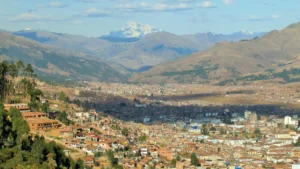
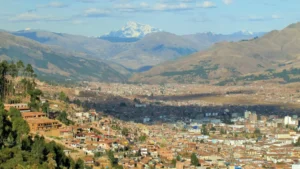
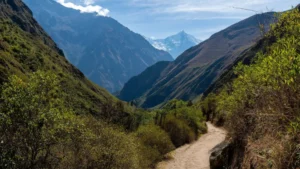
Snow-capped peaks are visible on clear days, framing the valley below during the drive to Moray.
The final stretch to Maras turns onto a dirt road, winding down the hillside toward the salt pools.
Frequently Asked Questions About Maras and Moray
Here are the most common questions travelers ask about visiting Maras and Moray.
Can I visit Maras and Moray without a tour?
Yes, though public transport does not serve either site directly. Most independent travelers hire a taxi or join a private tour instead.
How much time do I need for Maras and Moray?
Can I buy salt directly at the Maras salt pans?
Yes, several stands at the entrance sell bags of salt harvested on site.
Is Moray included in the Cusco Tourist Ticket (Boleto Turistico)?
Yes, Moray is one of the sites covered by the general Cusco Tourist Ticket, which is checked at the entrance.
Is Maras also covered by the Cusco Tourist Ticket?
No, Maras charges its own separate small entrance fee, paid on site.
Which site should I visit first, Maras or Moray?
Most tours visit Moray first, then Maras, since this follows the natural driving route from Cusco.
Do I need a guide at Moray and Maras?
A guide is optional. Informational signs exist at both sites, though a guide adds useful historical context.
Is there an age or fitness requirement to visit?
No strict requirement, though Maras involves more uneven walking than Moray. Most travelers of any age manage both sites at a relaxed pace.
Can I visit Maras and Moray in the rainy season?
Yes, though rain can make the dirt access road to Maras muddier and slower to drive.
How do I get from Cusco to Maras and Moray?
A private driver takes you from Cusco to Maras and Moray in one comfortable trip. Our Maras, Moray, and Chinchero route costs $85 by sedan, $96 by minivan, or $120 by Sprinter. The Maras, Moray, and Ollantaytambo route costs $80, $105, or $140 per vehicle.
Ready to Visit Maras and Moray?
Machupicchu Shuttle runs a private half-day tour covering Moray, Maras, and Chinchero, with pickup directly from your Cusco hotel or Sacred Valley accommodation. Check out all of our Cusco tours and private transfers for more ways to explore the region, from single transfers to full day trips.