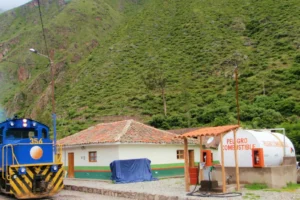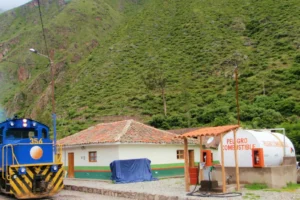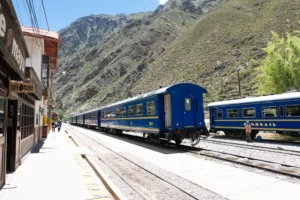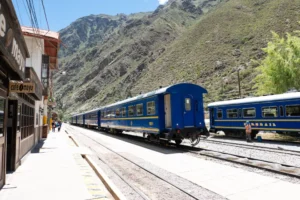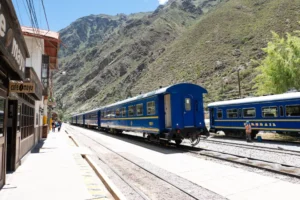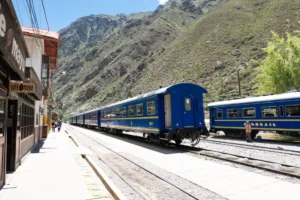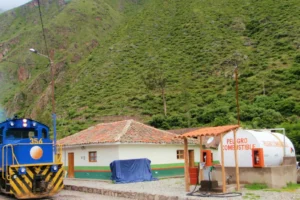
Inca Rail vs PeruRail is the first choice most travelers face when they book the train to Machu Picchu. Both companies run safe, scenic trains to Aguas Calientes.
This guide compares stations, train classes, comfort, and price. It also shows how a private ride connects your Cusco hotel to the right platform.
We provide private transport only, so we do not sell train tickets or tours. Instead, we take you to the station and meet you after your trip.
Inca Rail vs PeruRail at a Glance
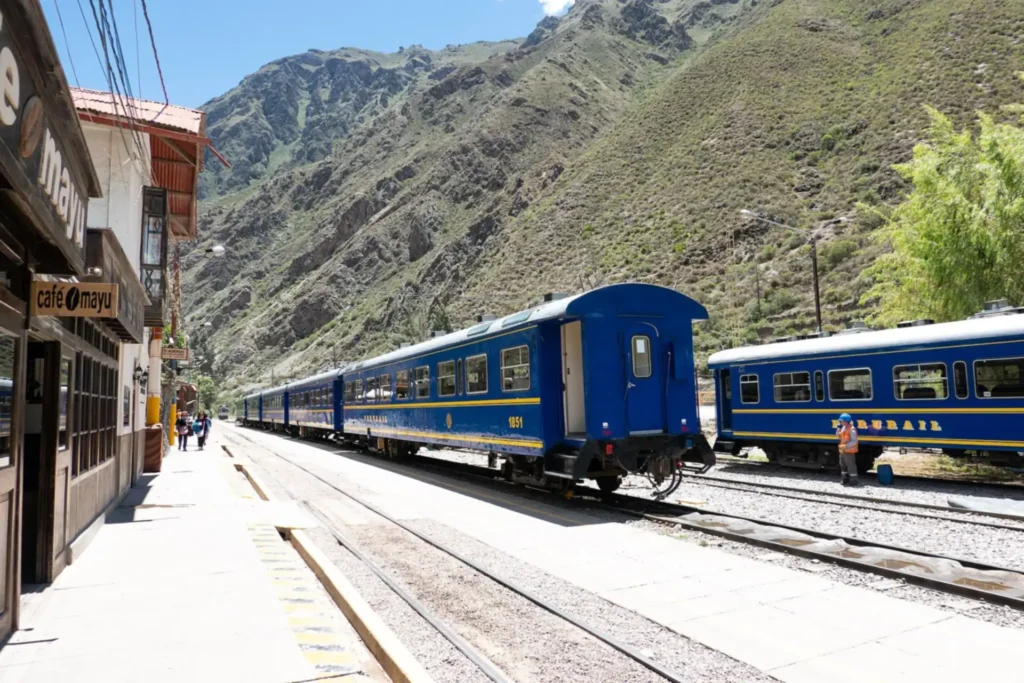
Inca Rail and PeruRail share the same single-track line along the Urubamba River. Both end at the Aguas Calientes station, close to the bus stop for the citadel.
The ride from Ollantaytambo takes about 1.5 hours on either company. Therefore, the real differences are the stations, the classes, and the extras on board.
In short, PeruRail offers more departure points around Cusco and the Sacred Valley. In contrast, Inca Rail focuses mostly on Ollantaytambo.
The Quick Answer on Inca Rail vs PeruRail
Choose PeruRail if you want to leave from Poroy or Urubamba, or if you like a long-established brand. Choose Inca Rail if you leave from Ollantaytambo and want its 360 degree panoramic car.
Both are reliable choices, so the best train is usually the one with the right time and seat. As a result, book by schedule first and brand second.

PeruRail vs Inca Rail: Stations and Departure Points
The station you use decides your whole morning. PeruRail runs trains from Ollantaytambo, from Poroy near Cusco, and from Urubamba on its Sacred Valley service.
Inca Rail runs mainly from Ollantaytambo. If you stay in Cusco, you will need a road transfer to reach it.
Leaving From Cusco on PeruRail or Inca Rail
The Poroy station sits about 20 minutes from central Cusco. Read our Poroy train station guide for the schedule and the drive.
Our guides to the Cusco train station and the Wanchaq train station explain the city stations. They help you avoid the wrong stop.
Leaving From Ollantaytambo
Ollantaytambo is the busiest boarding point, and both companies use it. See our Ollantaytambo train station guide for platforms and timing.
The drive from Cusco takes about two hours. Therefore, early trains mean an early start.
Inca Rail vs PeruRail: Train Classes Compared
Both companies sell several classes, from simple seats to luxury service. The names differ, but the idea is the same.
At the entry level, PeruRail runs the Expedition and Inca Rail runs the Voyager. Both have comfortable seats and large windows.
Mid-Range Trains
PeruRail’s Vistadome has panoramic windows and snacks on board. Inca Rail’s 360 degree train has wide windows, onboard commentary, and a small open-air observation car.
Many travelers compare these two classes first in the Inca Rail vs PeruRail decision. They offer the best balance of comfort and price.
Our Expedition vs. Vistadome guide explains the PeruRail classes in detail.
Premium and Luxury Trains
PeruRail’s Hiram Bingham is an all-inclusive luxury train with dining and live music. Inca Rail offers Prime, First Class, and private options with lounge-style service.
Premium fares are much higher than economy fares. However, they suit special trips and honeymoon travelers.
Inca Rail vs PeruRail: Comfort, Windows, and Onboard Service
All Machu Picchu trains have large windows, because the scenery is the main attraction. Seats face forward or backward in pairs, with tables on many cars.
Refreshments are included on the mid-range and higher classes of both companies. Moreover, you can buy extra snacks and drinks on board.
In the Inca Rail vs PeruRail debate, comfort is very close. Therefore, seat position and train time matter more than the logo.
Which Side to Sit On for the Best Views
The river and the best mountain views are on one side for most of the trip. Check your seat map when you book.
A window seat in a panoramic car adds extra sky views. Even so, you can enjoy the canyon from any seat.
Inca Rail vs PeruRail Price: How Much Do the Trains Cost?
One-way fares for both companies generally start around $60 to $90 per person for entry-level seats. Mid-range classes cost more, and luxury trains cost far more.
Prices change by date, time, and availability. Also, the cheapest seats sell out first in high season.
The Hiram Bingham can cost more than $500 per person one way. Therefore, most travelers choose Expedition, Voyager, Vistadome, or 360.
When to Book
Book your train as soon as you know your entrance ticket date. The best times sell out weeks ahead between June and August.
You can compare schedules on the PeruRail website and on Inca Rail’s comparison page. Keep in mind that each company describes its own service.
PeruRail vs Inca Rail Luggage Rules on Both Trains
Both Inca Rail and PeruRail enforce strict luggage limits, so large suitcases do not fit. Check the current limit when you book your ticket.
Leave your big bag at your Cusco hotel and pack a small bag for the night. That keeps boarding quick and the aisle clear.
Our Machu Picchu by train guide shows what to pack and what to leave behind.
How to Choose Between PeruRail and Inca Rail
Start with your schedule, because the train time drives the rest of your day. Pick the company and class that fits your entrance time and your budget.
Next, check the departure station. A Poroy train is easiest if you sleep in Cusco, while Ollantaytambo is best for a shorter ride.
Finally, decide how much comfort you want. If you like open views, choose a panoramic car on either line.
Best for Families
Both companies welcome children and offer seats for groups. Choose a mid-range class for snacks and larger windows.
A private minivan or Sprinter then keeps the family together on the road. That makes the whole day simpler.
Best for Couples and Special Trips
Premium classes suit anniversaries and honeymoons. Also, a private car to the station adds a calm start.
Best on a Budget
Entry-level seats on either train are the lowest-cost option. Book early, because those seats sell out first.
What Inca Rail and PeruRail Have in Common
Both companies use the same single-track line and arrive at the same Aguas Calientes station. As a result, the scenery, the river views, and the arrival are identical.
Both sell tickets online, and both send an e-ticket you can show on your phone. Also, both ask you to carry the same passport you used for your entrance ticket.
Staff on both trains speak English, and announcements are clear. Therefore, you can relax and enjoy the ride.
PeruRail vs Inca Rail Schedules and Seats
Both companies run several trains a day in high season. In the low season, they offer fewer departures.
Early and late trains sell out first, because they fit day-trip plans. Therefore, check the schedule for both companies before you commit.
Seat maps differ by class, so look at the layout on the booking page. Window seats and table seats usually cost the same within one class.
Peak Season vs Low Season
Peak season runs from June to August, with long lines and full trains. The rainy months bring more weather delays but also lower prices.
In either case, book your train and your entrance ticket together. As a result, your timing works from the start.
Can You Mix Inca Rail and PeruRail on One Trip?
Yes. Tickets are sold per direction, so you can ride out with one company and return with the other.
This helps when the best morning train and the best evening train belong to different companies. Therefore, compare both timetables for each leg.
Keep both confirmations handy, and give your driver both train times. We track them for your pickup.
Inca Rail vs PeruRail for a Same-Day Return to Cusco
Many visitors ride out in the morning and return the same night. This plan works with either company if you pick the right trains.
An early train from Ollantaytambo gets you to Aguas Calientes before 10:00 a.m. Then you have several hours for the citadel and lunch.
The evening train back leaves in the late afternoon or evening. After that, the drive from the station to Cusco takes about two hours.
Matching Train Times to Your Entrance Ticket
Your entrance ticket has a fixed time window. Therefore, choose a train that arrives at least 90 minutes before it.
That buffer covers the walk to the stop and the bus queue. It also protects you from small delays.
Connecting Your Hotel to the Station
The train is only part of the trip. You also need a reliable ride to and from the platform.
Our fixed fare from Cusco to Ollantaytambo is $44 for a sedan, $58 for a minivan, and $73 for a Sprinter. Our fare from Cusco to Poroy is $20, $35, or $58 by vehicle size.
Prices are per vehicle, not per person. See our Cusco to Ollantaytambo guide and our Train from Cusco to Machu Picchu guide for the full routes. Read our guide to train safety, delays, and backup plans before you travel. After you choose a company, see how to buy and price your tickets for fares and rules. For more detail, see our guide to Inca Rail services and stations, guide to PeruRail trains and stations, and Machu Picchu train hours and times. For the return leg, see our return train from Aguas Calientes to Ollantaytambo.
Your Return After the Train
After the evening train, your driver waits at Ollantaytambo or Poroy with a name sign. Read our Machu Picchu to Cusco guide for every return option.
The drive from Ollantaytambo to Cusco takes about two hours. See the Ollantaytambo to Cusco guide for the fare.
Inca Rail vs PeruRail Safety and Delays
Both companies run on the same single-track line, so a delay on one can affect the other. Weather, protests, and operational issues can sometimes pause trains for a few hours or a few days.
Check the company’s live status page before you travel. It shows what to do if your train changes.
Also, build a buffer into your plans. Avoid booking a tight flight on the day after your train.
Plan B for Disruptions
If trains stop, a private driver can take you to the Hidroelectrica route. Our Hidroelectrica to Aguas Calientes guide explains how it works.
After the train ride, read our Machu Picchu bus guide for the ride to the citadel. It covers the schedule and the ticket rules.
Common Mistakes When Comparing Inca Rail vs PeruRail
The first mistake is choosing a train by brand without checking the departure station. A good ticket from the wrong station costs you hours.
The second is booking a train that leaves too early or too late for your entrance time. Therefore, match the train, the bus line, and the entrance slot.
The third is packing a large suitcase. Both companies limit bags, so leave extras in Cusco.
One Train Does Not Fit Everyone
There is no single winner in the Inca Rail vs PeruRail contest. The right train is the one that matches your station, schedule, and comfort level.
If you want a simple plan, see our Machu Picchu day trip guide. It compares the day trip and the overnight option.

Book Your Private Ride to the Train
Whichever company you choose, a reliable ride keeps your Machu Picchu day calm. Our English-speaking drivers track your train and wait if you are late.
Share your train time and hotel, and we confirm a fixed price in minutes. Then you can enjoy the scenery from the platform to the citadel.
Is Inca Rail or PeruRail better?
Neither is better for everyone. In the Inca Rail vs PeruRail choice, pick the train with the right time, station, and class for your plan.
Do Inca Rail and PeruRail go to the same station?
Yes. Both trains arrive at the Aguas Calientes station, which is close to the bus stop for the citadel.
Which stations does PeruRail use?
PeruRail runs trains from Ollantaytambo, Poroy near Cusco, and Urubamba on its Sacred Valley service.
Which station does Inca Rail use?
Inca Rail runs mainly from Ollantaytambo. If you stay in Cusco, you need a road transfer to reach it.
How long is the train ride on either company?
From Ollantaytambo, the ride takes about 1.5 hours on both. Trains from Poroy take longer because they start farther away.
How much do the trains cost?
One-way fares for both companies generally start around $60 to $90 per person for entry-level seats. Prices rise with the class and the date.
Is the PeruRail vs Inca Rail difference big in comfort?
Not for most travelers. Comfort is close at each class level, so schedule and seat position matter more than the brand.
Can I take a large suitcase on the train?
No. Both companies enforce strict luggage limits. Leave your large bag at your Cusco hotel and pack a small bag.
Do you sell Inca Rail or PeruRail tickets?
No. We provide private transport only, so we do not sell train tickets, entrance tickets, or tours.
How much is a private ride from Cusco to the train station?
Our fixed fare is $44, $58, or $73 per vehicle to Ollantaytambo, and $20, $35, or $58 to Poroy. The fare covers the whole vehicle, not each person.